

Dashboard Apps
On this page
Note
This is a Preview feature.
SingleStore Dashboard Apps enables users to create, publish, and manage real-time interactive dashboards through the Cloud Portal.
Create and manage dashboard apps using the Cloud Portal.
Publish Dashboard Apps using the Cloud Portal
Create a Dashboard App
Dashboard Apps can be created for shared notebooks only.
-
Using Dashboards in the left navigation
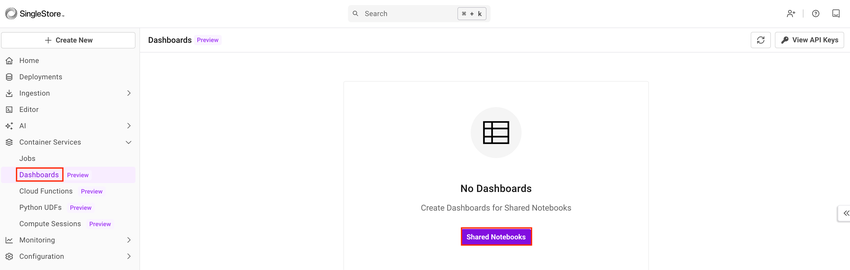
-
Using Shared Notebooks
-
Navigate to Editor > Shared.
-
Select a shared notebook.
-
Select Publish (on the top right).
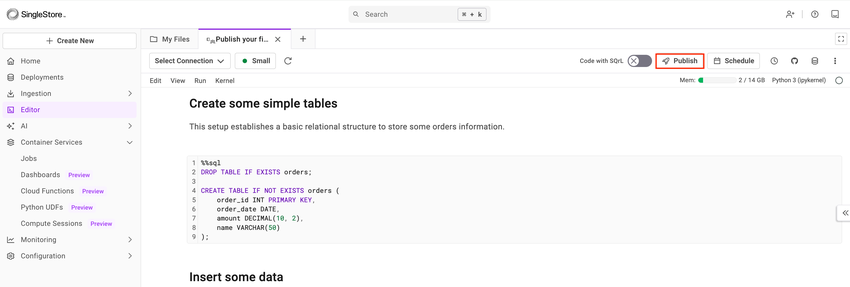
-
New Dashboard App
After selecting Publish, a new dialog box appears.
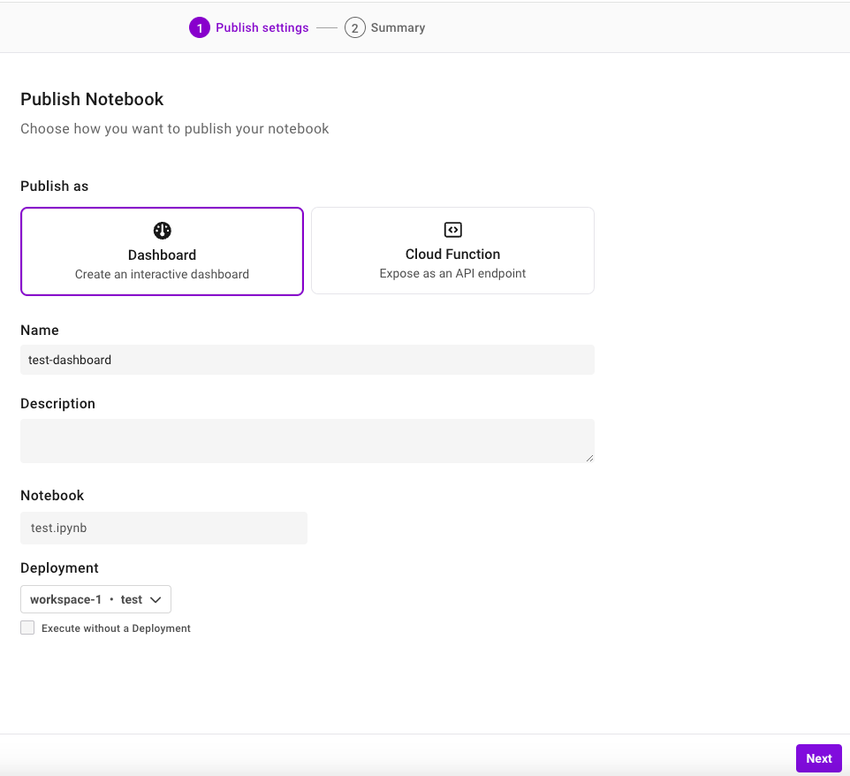
|
Publish Settings | |
|---|---|
|
Publish as |
Select Dashboard. |
|
Name |
Enter a name of the dashboard app. |
|
Description |
Enter the dashboard app description. |
|
Notebook |
Select a shared notebook to publish as a dashboard app. |
|
Deployment |
Select the SingleStore deployment (workspace) the notebook connects to. Selecting a workspace allows connecting to the SingleStore databases referenced in the notebook natively. |
|
Runtime |
Select a runtime from the following:
Note This field is in preview. |
|
Region |
Select a region. |
|
Idle Timeout |
Select an idle timeout. Note This field is in preview. |
Select Next.
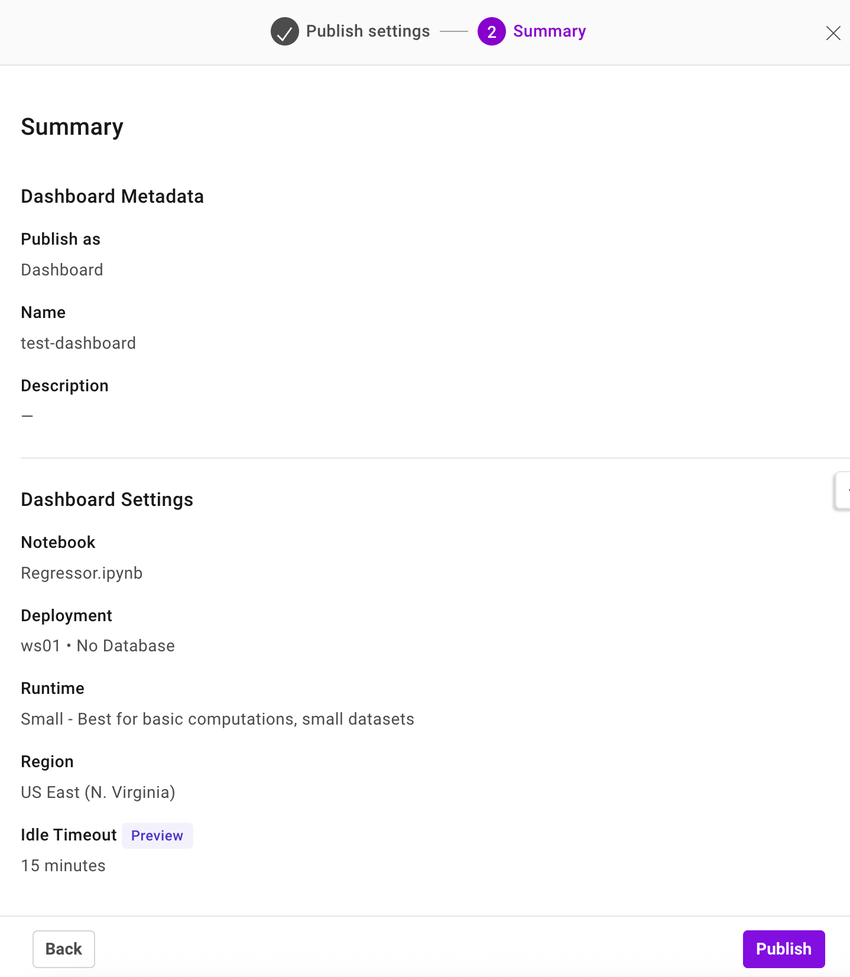
Select Publish to publish the notebook as a dashboard app.
Manage an Existing Dashboard App
To view an existing dashboard app, select Dashboards in the left navigation.
-
View
-
Update
-
Share
-
Delete
View an Existing Dashboard App
To view an existing dashboard app, select the dashboard app name under the Name column.
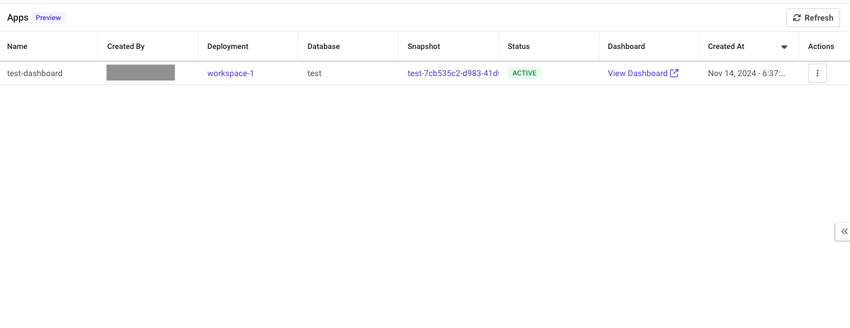
View the following details for each dashboard app:
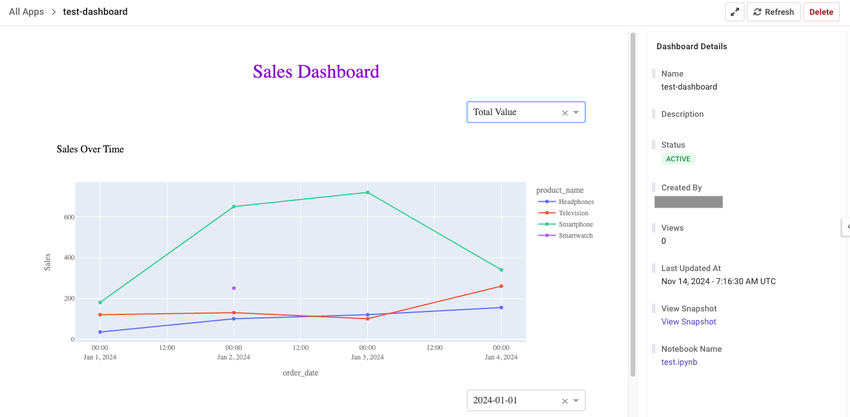
View the details of a dashboard app on the right navigation.
-
View Dashboard in New Tab
-
View API Keys
-
View Live Logs
-
Share
-
Update
-
Delete
View API Keys
Refer to Aura App API Keys for related information.
View Live Logs
To view live logs of the selected dashboard app, select View Live Logs from the ellipsis on the right side.
Update an Existing Dashboard App
To update an existing dashboard app, select the ellipsis in the Actions column of the dashboard app, and select Update.
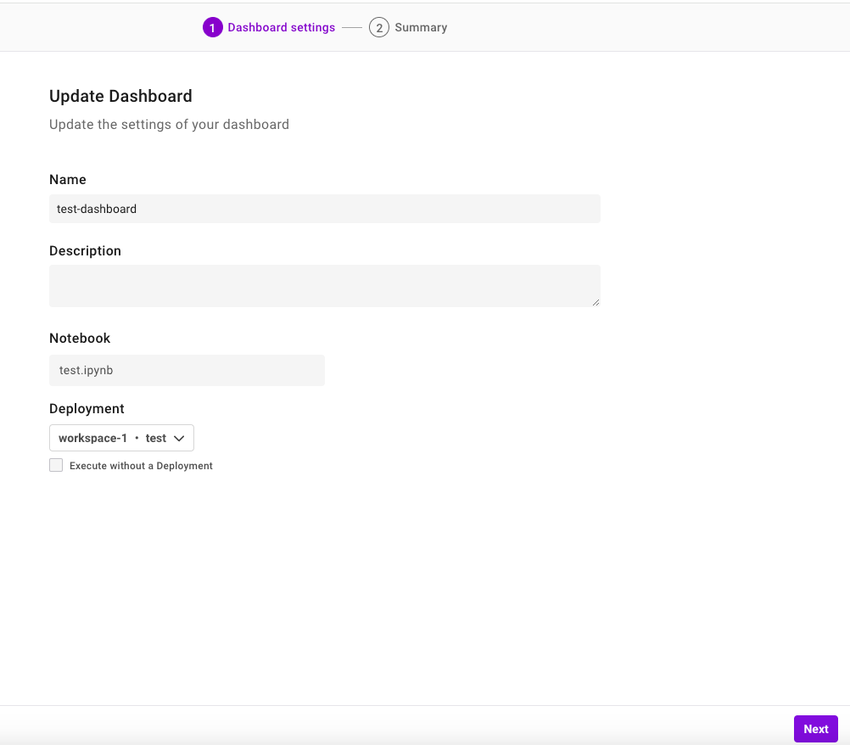
A dashboard app can also be updated using the shared notebook.
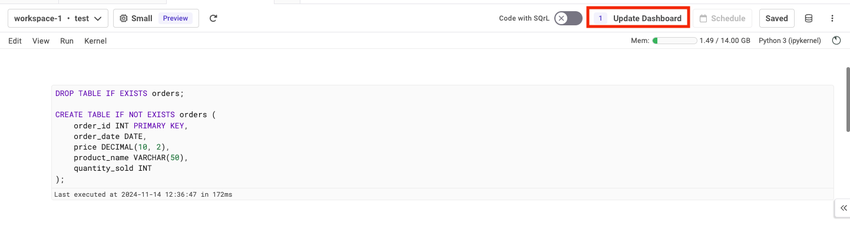
Select Update Dashboard and select Update.
Share an Existing Dashboard App
To share an existing dashboard app, select the ellipsis in the Actions column of the dashboard app, and select Share
Delete an Existing Dashboard App
To delete an existing dashboard app, select the ellipsis in the Actions column of the dashboard app, and select Delete.
Status of Dashboard Apps
|
Status |
Description |
|---|---|
|
Initializing |
The notebook is creating or updating the dashboard. |
|
Active |
The dashboard is configured correctly. |
|
Failed |
The dashboard is not configured correctly. |
|
Error |
An error unrelated to the notebook code prevented the dashboard from initializing. |
Troubleshoot Dashboard Apps
SingleStore automatically saves a snapshot of the notebook for each execution that fails.
|
Error |
Solution |
|---|---|
|
Workspace Deleted |
Update the dashboard and select a deployment. |
|
Workspace Suspended |
Resume the workspace or create a new dashboard with a different deployment. |
|
Database Detached |
Reattach the database with the right permissions or create a new dashboard with a different database. |
|
Notebook Deleted/Not Present |
Create a new dashboard with a different notebook. |
|
Internal Errors/Misc |
Reach out to SingleStore Support or use the chat feature in the Cloud Portal. |
Last modified: November 27, 2025